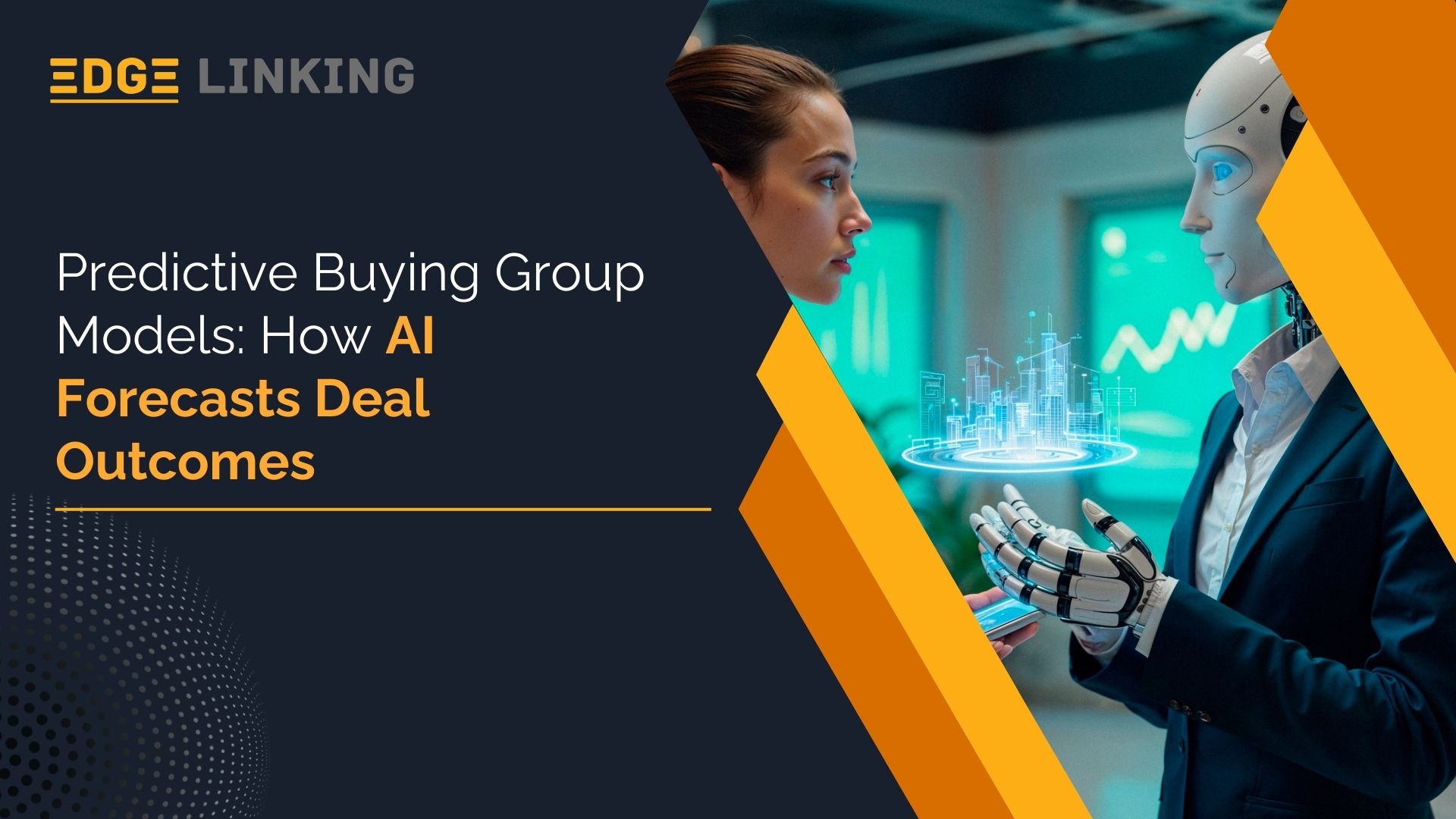
A procurement leader opens her laptop, not to surf vendor sites, but to analyze a report compiled by an AI assistant. This assistant has already analyzed analyst reports, evaluated pricing models, and matched features to her company’s existing tech stack. She arrives at the internal meeting with her buying group with a list. No cold calls. No endless demo requests.
This is what B2B buying will look like in 2016. Content must answer deeper questions. Messaging must be precise. Demand generation must anticipate intent signals across channels.
This article talks about the shift AI brings to B2B buying behavior.
AI and the B2B Buying Journey: What’s Changed in 2026?
Here’s how AI is reshaping the B2B buying journey in 2016.
1. Research Begins with AI, Not Search Engines
Buyers use AI assistants to request comparisons, summaries, and recommendations. Your content needs to be easily understood by AI assistants.
Example: A marketing director researching a content syndication service uses an AI assistant to compare different vendors based on cost per lead, quality of audience, and industry expertise.
2. The Buying Group Is More Informed, Individually
In 2026, each member of the buying group uses AI independently. IT evaluates integration. Finance builds models of cost decisions. Operations examine implementation schedules.
Example: In a SaaS purchase, the CFO uses AI to build ROI projections for three years, and the CTO assesses security risks with automated reports.
3. Sales Enters the Conversation Later
AI enables customers to respond to simple questions on their own. They read case studies, product descriptions, and comparisons with competitors before engaging with sales. Sales need to be validated, customized, and risky.
Example: A manufacturing company shortlists two companies for automation before scheduling demos. At this point, the buying team is already aware of the cost ranges and missing functionalities.
4. Increased Demand for Proof and Transparency
AI points out inconsistencies and ambiguous statements. Customers demand data, comparisons, and results.
Example: When a B2B company says “40% efficiency gain,” AI compares customer reviews, case studies, and industry standards.
Why AI Is Making B2B Buyers More Independent (and What That Means for Sales)
In 2026, in addition to enabling marketing and sales, AI is also enabling the empowered B2B buyer.
1. Shortlists Are Finalized Before Sales Outreach
AI helps the buyer finalize shortlists at an early stage. Before sales outreach, most suppliers are ruled out.
Example: A manufacturing firm looking for supply chain software uses AI to evaluate 15 suppliers. Only four are shortlisted.
What this means for sales:
Visibility is required at an early stage. Content and positioning are key to AI evaluation before sales outreach.
2. Decision-making is Data-driven, Not Relationship-driven
Although relationships are always critical in B2B, AI has shifted the emphasis back to data-driven decision-making. Buyers use AI models for simulating ROI, outcome, and risk.
Example: A CFO evaluating an enterprise solution uses AI financial models to determine the total cost of ownership for each supplier.
What this means for sales:
The sales dialogue must be based on tangible results. The buying group will not be swayed by the value of emotional appeal alone.
3. The Buying Group Functions in Parallel
With AI, members of the buying group can research in parallel while remaining on the same page via summaries and reports.
Example: In a marketing automation purchase, the CMO assesses the functionality of the campaigns, the CFO assesses the cost estimates using AI software, and the operations manager assesses onboarding processes. They arrive at the first vendor meeting with shared priorities.
What this means for sales:
You’re not selling the solution; you’re challenging the assumptions of the buying group.
Will AI Replace Traditional Sales Outreach? The 2026 B2B Reality
The reality is more balanced. Here’s what’s actually happening on the ground.
1. AI Is Automating Research, Not Relationships
AI can analyze company data, detect intent signals, and write personalized emails. But AI alone cannot build trust relationships.
Example: A SaaS company uses AI to detect accounts that showed interest in content related to the supply chain. The AI writes personalized emails based on industry, company size, and behavior.
Reality: AI increases productivity, but relationships are the secret to success.
2. Complex Buying Groups Still Need Human Guidance
AI can provide ideas, but AI cannot negotiate or come to a consensus.
Example: In a sale, IT checks security, and the finance group is worried about cost management. A salesperson can connect the dots and solve the problem.
Reality: In B2B sales, relationships still hold the key.
3. Cold Outreach Is Less Effective Than Contextual Outreach
Generic cold emails are easily ignored. AI has raised buyer expectations. Messages must be relevant and timely.
Example: Instead of sending emails, a sales team reaches out after noticing that multiple members of a buying group downloaded a whitepaper.
Reality: AI supports outreach, but relevance still depends on understanding the buyer’s pain points.
Conclusion
In 2026, success depends on working alongside AI, not competing with it. The companies that adapt to this new buying behavior will build stronger relationships and earn credibility in the marketplace.